Last updated: Friday, 21 August 2026 | Rāmere, 21 Hereturikōkā, 2026
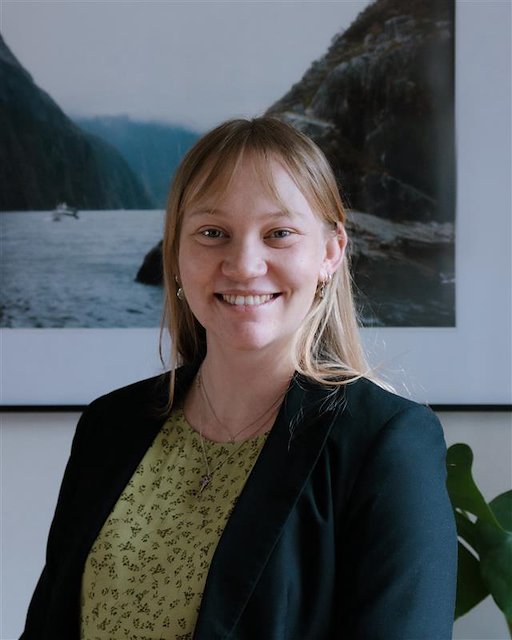
Saskia Whiston (Te Arawa, Tūhourangi-Ngāti Wahiao) is a Senior Advisor in Tāmaki Makaurau, who has been with Te Puni Kōkiri since January 2024. In her time here, she has taken on a wide range of kaupapa, contributed to Māori economic development and Iwi and Māori relations with the Crown, moved from an Advisor role into a Senior Advisor position, and continued to build her experience across different areas of Te Puni Kōkiri.
Saskia grew up with strong connections to Te Arawa through her father’s side and says her background has played an important role in shaping her interest in Māori development and community-focused work. After graduating from Te Herenga Waka Victoria University of Wellington with degrees in Law and Development Studies, she was looking for a role that would allow her to bring those interests together.
“I was really keen to do work that combined Māori development with something that was community-focused and people-focused,” she says. “I had spent a lot of time in Rotorua growing up and saw firsthand the strength of Māori business and culture there, and what that means not just for Te Arawa, but for the region and for Aotearoa more broadly.”
Before joining Te Puni Kōkiri, Saskia worked at the Ministry of Foreign Affairs and Trade, where she was introduced to the public service and developed an interest in work that contributes to a better Aotearoa. She saw Te Puni Kōkiri as an opportunity to continue that work in a way that was more directly connected to Māori communities.
“At MFAT, I really enjoyed the focus on improving outcomes for Aotearoa, and in some ways the mahi is similar, building relationships, gathering insights, and supporting policy development,” she says. “At Te Puni Kōkiri, you have that same purpose but with a closer connection to communities and whānau.”
Saskia began her time at Te Puni Kōkiri supporting a wide range of kaupapa, including investments, rangatahi and employment initiatives, housing repairs, te taiao and regional application of Te Tautuhi ō Rongo. This early exposure gave her a broad understanding of how the organisation operates and the different ways it contributes to Māori development.
“There’s been a huge range of kaupapa that I’ve worked on,” she says. “That’s one of the things I’ve really enjoyed, the variety, and the mix of people you get to connect with and learn from.”
As the organisation has evolved, Saskia’s role has shifted more into the Iwi and Māori Relations space. Her work now includes engaging with Post-Settlement Governance Entities (PSGEs), supporting the monitoring of settlement commitments, and maintaining a strong presence in the takiwā of central Tāmaki.
“It’s quite on-the-ground mahi,” she says. “A big part of it is building relationships and understanding the communities we work with, Iwi, marae, and whānau, while also doing the internal work like reporting, research, and writing.”
She says this balance between community engagement and internal advisory work has helped her better understand the full context of Te Puni Kōkiri’s role.
“You really start to see how everything connects, the work happening on the ground, and how that feeds into the advice and support we provide across government,” she says.
Saskia has also had the opportunity to work in the Māori economic development space, which she describes as one of the most rewarding parts of her role. Through this work, she has connected with pākihi Māori and supported initiatives that contribute to growth and innovation.
“One of my favourite parts has been working with Māori businesses and their leaders,” she says. “You meet people who have these incredible ideas and are taking them to the world, and being able to play even a small role in supporting that is really special.”
She says these experiences have been both inspiring and impactful, particularly when seeing the dedication many Māori leaders have to creating positive outcomes for their communities.
“Hearing the passion these business leaders have for Māori success globally is really inspiring,” she says.
Reflecting on her time at Te Puni Kōkiri, Saskia says one of the key reasons she has stayed is the opportunity to keep learning and evolving in her role.
“It feels like we’re constantly learning and growing,” she says. “We maintain a clear focus on thriving whānau, but what that looks like and how we get there continues to evolve.
In the time I’ve been here, I’ve learnt so much, and that hasn’t stopped.”
She also highlights the breadth of work across Te Puni Kōkiri as something she hadn’t fully appreciated before joining.
“I don’t think I realised the scope of what we do before I started,” she says. “There are so many different ways we’re involved across government and across te ao Māori, and that’s one of the unique strengths of working here, you get to experience a really broad range of kaupapa.”
Saskia says the support for professional development has also been a highlight of her time at Te Puni Kōkiri. She has taken part in te reo Māori classes and joined Toastmasters to build her public speaking skills, both supported by the organisation.
“Continuing my te reo journey alongside colleagues has been really special,” she says. “And being supported to build skills like public speaking has definitely helped me grow in my role.”
She also acknowledges the strong team culture and sense of manaakitanga within the organisation, particularly as she prepares to welcome her first child later this year.
“Everyone has shown so much care and support,” she says. “People genuinely check in and look out for you, and that makes a big difference.”
For Saskia, it is the combination of meaningful kaupapa, continuous learning, and strong relationships that defines her experience at Te Puni Kōkiri.
“You’re constantly learning, building connections, and contributing to something that has real impact,” she says. “That’s what makes the work so rewarding.”