Showing 81 - 90 of 119 publications.
Cultural Revitalisation: One Pasifika Perspective
Anne Moefa’auo is an educator, having taught migrants, refugees, Pasifika and Maori students for more than 20 years.
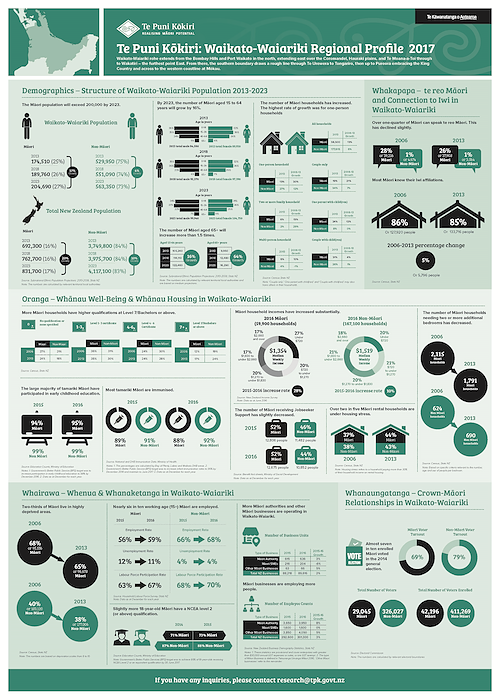
Te Puni Kōkiri: Waikato-Waiariki Regional Profile 2017
Te Puni Kōkiri measures a range of outcomes that fall within Whakapapa (te reo Māori and connection to iwi), Oranga (whānau well-being and whānau housing), Whairawa (whenua and whanaketanga), and Whanaungatanga (Crown-Māori relationships). This publication provides an insight into the growth and development of Māori within these outcomes in the Waikato-Waiariki region.
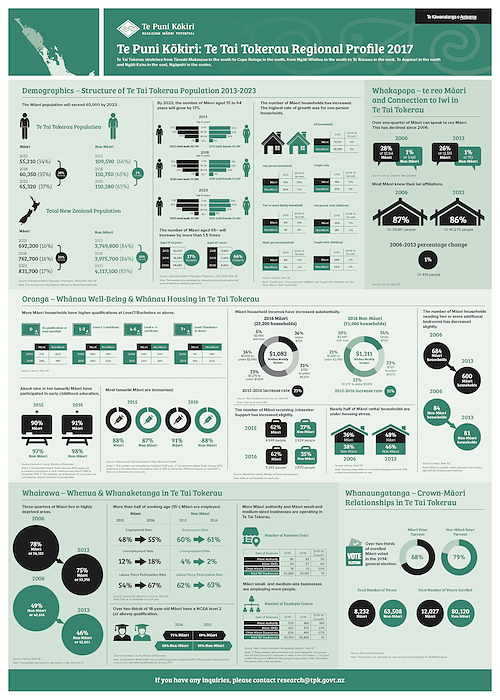
Te Puni Kōkiri: Te Tai Tokerau Regional Profile 2017
Te Puni Kōkiri measures a range of outcomes within Whakapapa (te reo Māori and connection to iwi), Oranga (whānau well-being and whānau housing), Whairawa (whenua and whanaketanga), and Whanaungatanga (Crown-Māori relationships). This publication provides an insight into the growth and development of Māori within these outcomes in the Te Tai Tokerau region.
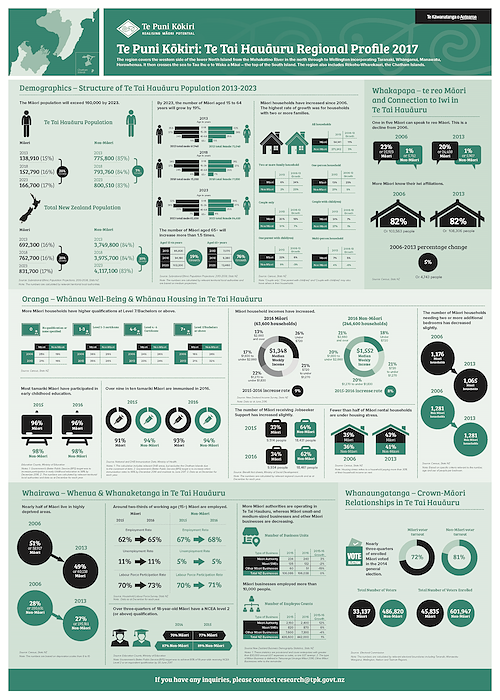
Te Puni Kōkiri: Te Tai Hauāuru Regional Profile 2017
Te Puni Kōkiri measures a range of outcomes that fall within Whakapapa (te reo Māori and connection to iwi), Oranga (whānau well-being and whānau housing), Whairawa (whenua and whanaketanga), and Whanaungatanga (Crown-Māori relationships). This publication provides an insight into the growth and development of Māori within these outcomes in the Te Tai Hauāuru region.
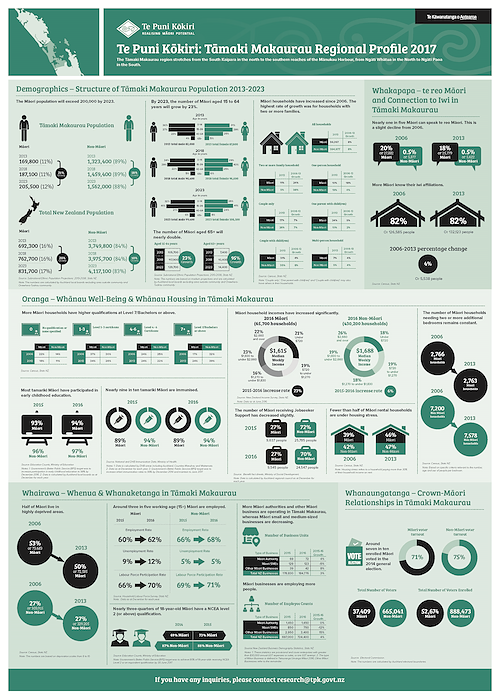
Te Puni Kōkiri: Tāmaki Makaurau Regional Profile 2017
Te Puni Kōkiri measures a range of outcomes that fall within Whakapapa (te reo Māori and connection to iwi), Oranga (whānau well-being and whānau housing), Whairawa (whenua and whanaketanga), and Whanaungatanga (Crown-Māori relationships). This publication provides an insight into the growth and development of Māori within these outcomes in the Tāmaki Mākaurau region.
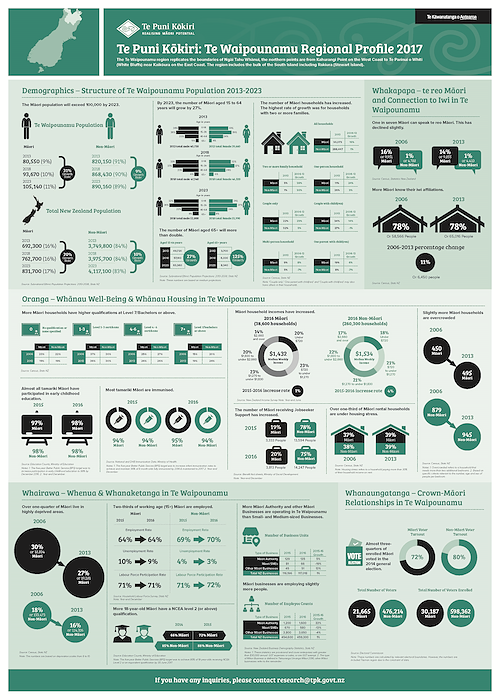
Te Puni Kōkiri: Te Waipounamu Regional Profile 2017
Te Puni Kōkiri measures a range of outcomes that fall within Whakapapa (te reo Māori and connection to iwi), Oranga (whānau well-being and whānau housing), Whairawa (whenua and whanaketanga), and Whanaungatanga (Crown-Māori relationships). This publication provides an insight into the growth and development of Māori within Te Waipounamu and within these outcomes.
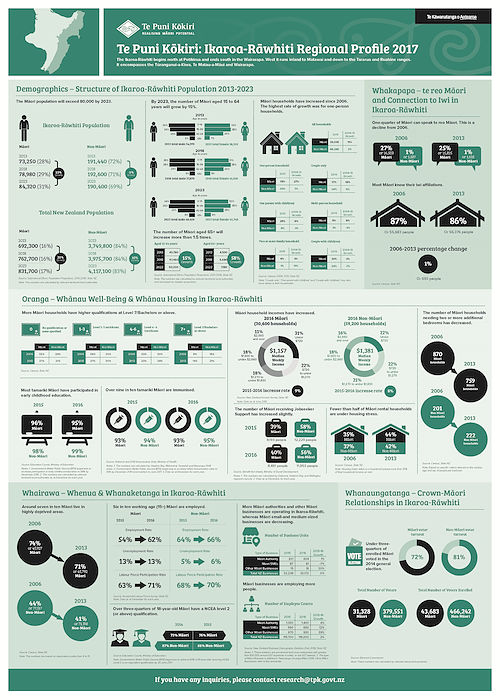
Te Puni Kōkiri: Ikaroa-Rāwhiti Regional Profile 2017
Te Puni Kōkiri measures a range of outcomes within Whakapapa (te reo Māori and connection to iwi), Oranga (whānau well-being and whānau housing), Whairawa (whenua and whanaketanga), and Whanaungatanga (Crown-Māori relationships). This publication provides an insight into the growth and development of Māori within these outcomes in the Ikaroa-Rāwhiti region.
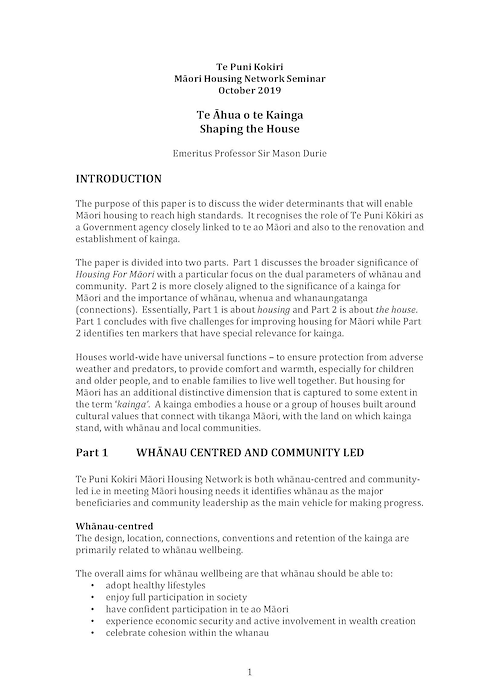
Te Ahua o te Kāinga – Shaping the House
Emeritus Professor Sir Mason Durie discusses the wider determinants that will enable Māori housing to reach high standards.
The Status of Marae in 2009 – Te Ora o te Marae i 2009
Marae are a key feature of the cultural Infrastructure of Māori society, acting as guardians of mātauranga and taonga and connecting whānau through whakapapa. The Status of Marae in 2009 report presents some of the findings from the Marae Development Project undertaken by Te Puni Kōkiri Regional Offices in 2009.
Cultural Revitalisation and the making of identity with Aotearoa New Zealand
Donna Matahaere Atariki is of Ngāi Tahu, Ngāti Ruanui, Ngā Rauru and Te Atiawa descent, has a background in Māori development and is engaged in roles at national, regional and local levels, including the Chair of the Ōtākou Rūnanga, a member of the University of Otago Council, and a Gambling Commissioner.